From 2 weeks to 2 hours — powered by AI
The Situation
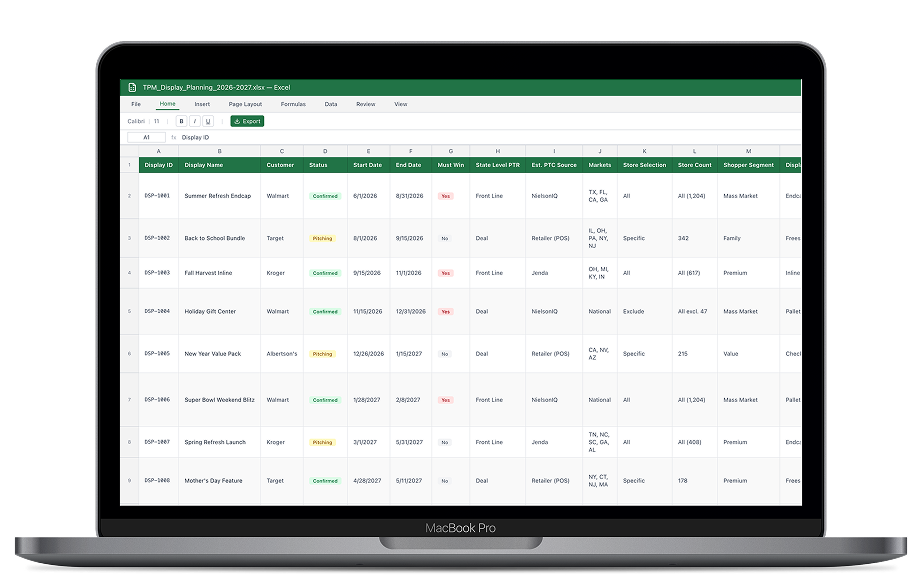
In the consumer goods and retail space, trade developers invest significant time and budget building display programs for national accounts. These programs are carefully planned — product ordered, timing set, sales consultants briefed. Yet despite this preparation, a critical execution gap consistently eroded their value.
The Problem
Because program details lived in offline systems, information sharing was manual and unreliable — leaving sales consultants and merchandisers working from stale data.
The business case was clear and quantifiable: closing that execution gap — enabling displays to be set up within the first 5 days of a scheduled program — was worth $115 million annually.
Typical Process & Timeline
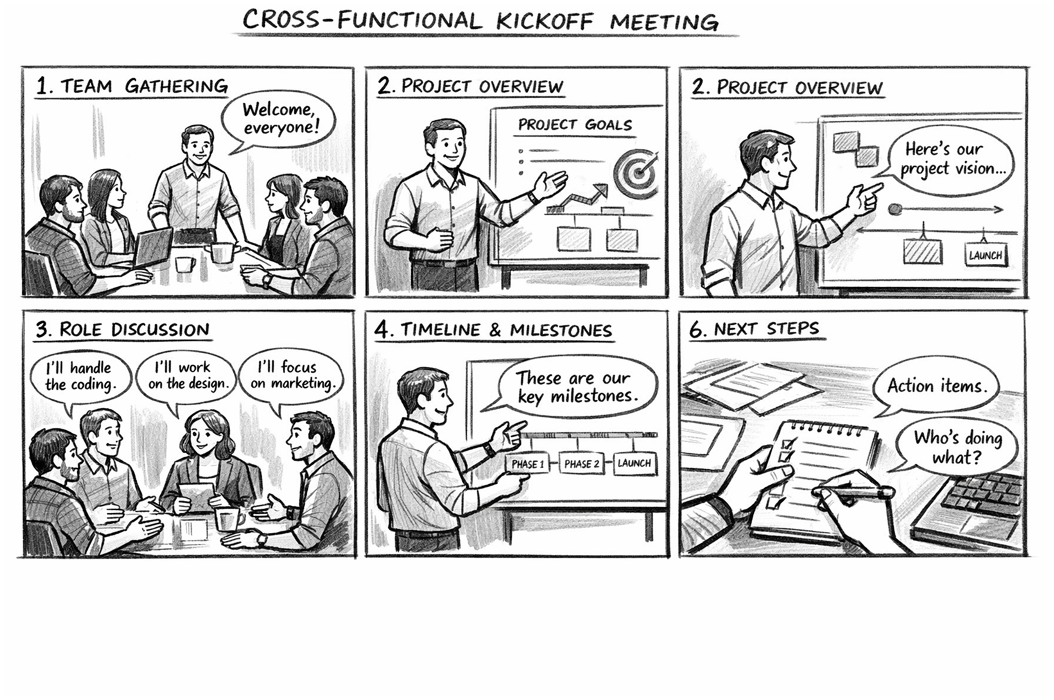
Day 1 > Kickoff Meeting
Stakeholders gather to define the problem, align on business requirements, and establish success metrics. Initial user stories and technical constraints are documented.
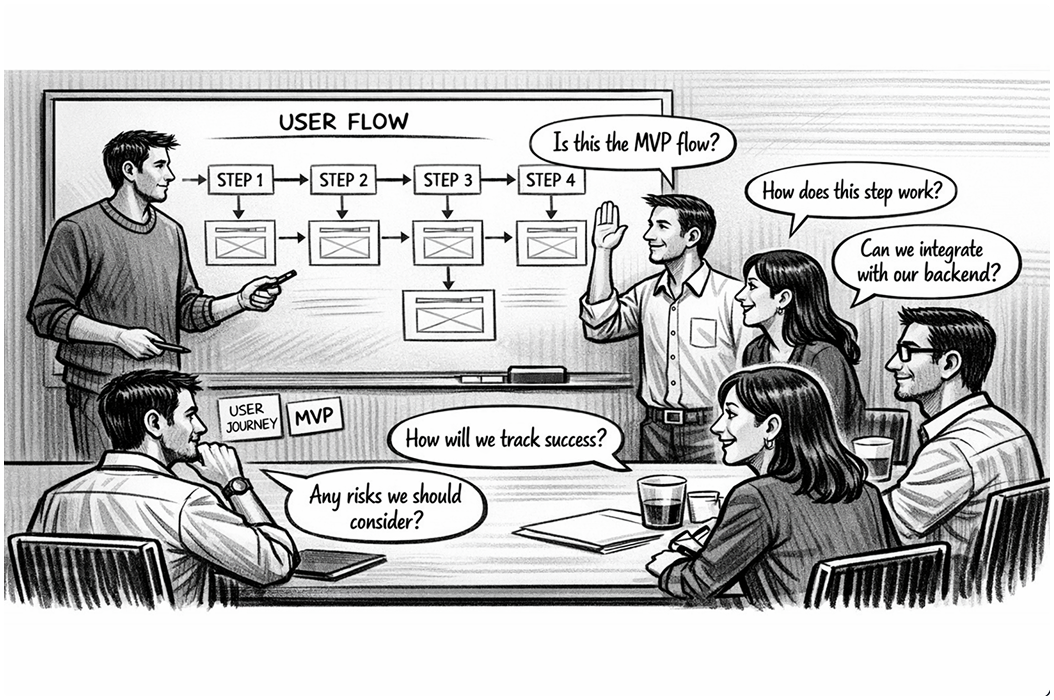
Day 2-4 > Kickoff Meeting
User flow is created and validated, and technical dependencies identified. Cross-functional teams validate assumptions and refine scope.
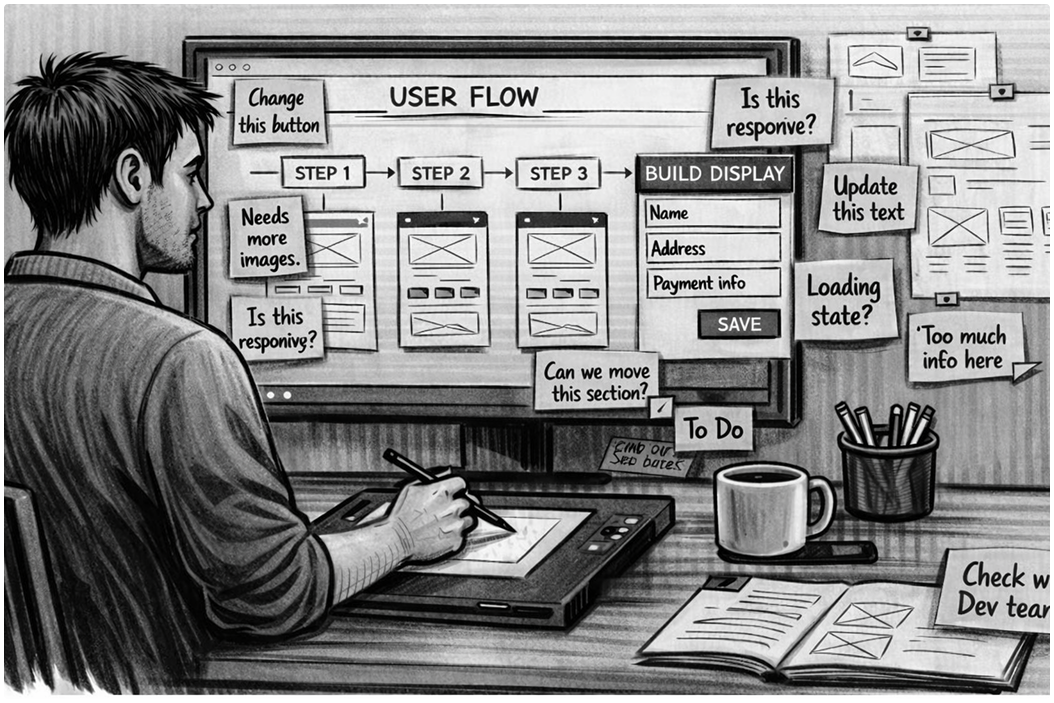
Day 5-9 > Wireframes
Low-fidelity wireframes are created to establish information architecture and core functionality. Multiple iterations are reviewed internally before stakeholder presentation.
Day 10> Review & Revise
Stakeholders review wireframes, provide feedback, and request changes. Designers incorporate revisions and prepare for the next phase.
AI Powered
A team's ability to see, touch, and interact with a product drastically changes the focus.
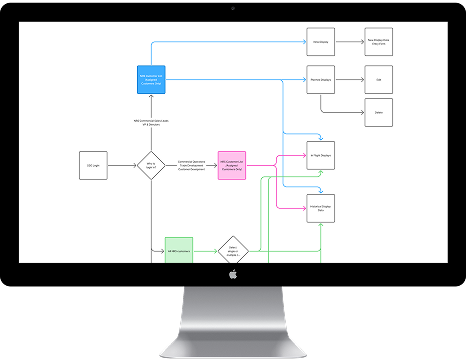
0:30 > Build the flow
Mapped the complete user flow in Figma, then pressure-tested it with Product and Stakeholders: are we solving the right problem?
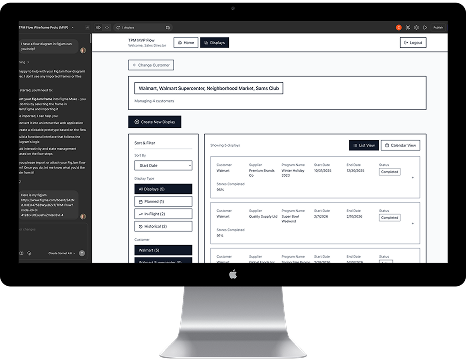
0:30 > Convert & vibe code
Brought the flow into Figma Make, set fidelity and requirements, then iterated live — adjusting in real time as the prototype took shape.
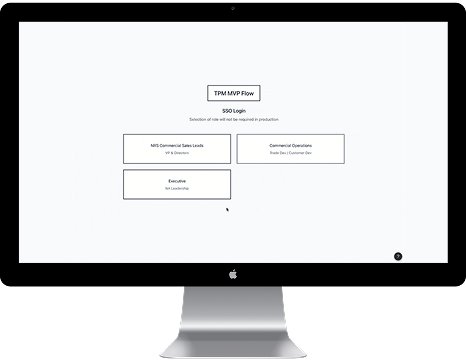
1:00 > Revise and refine
A fully functional, interactive prototype — ready for the cross-functional team to click through, challenge, and build on.
"We were no longer talking conceptual. The discussions were real — the problems, the data we'd need, the backend services required. That shift happened in a single session."
Key Takeaways
The $115M opportunity wasn't theoretical — it was quantified and waiting to be captured. Speed to alignment is speed to revenue.
The $115M Opportunity
Early technical discovery reduces downstream risk. Surfacing backend requirements in hour two instead of week four is a meaningful efficiency gain.
Early discovery
AI doesn't replace the design process — it accelerates the parts that previously required days of manual effort, freeing designers to focus on quality and alignment.
Accelerates alignment
Stakeholder confidence is a product of visibility. Teams that can show something real, early, build the organizational trust needed to move fast.
Stakeholder confidence
Tangibility drives better conversations. A working prototype transforms cross-functional sessions from conjecture to problem-solving.
Better conversations